

In the Prince Mahidol Award Conference 2026 (PMAC 2026), held from January 26–31, 2026, at the Centara Grand & Bangkok Convention Centre at CentralWorld, the Health Intervention and Technology Assessment Program Foundation (HITAP) participated in supporting and driving the international exchange of health policy knowledge through involvement in several activities.
Tackling the clean water crisis in remote areas, aiming to reduce health inequality and create sustainable water security.
On January 26, 2026, researchers from the Medical Innovation Development and Assessment Support (MIDAS) unit, in collaboration with academic partners including the National University of Singapore (NUS) and Wateroam—a social enterprise developing innovative water filtration systems from Singapore—organized a side meeting titled “Clean Water, Shared Futures: Strengthening Water Security, Sustainability and Equity for Rural Health amid Demographic Change.” The meeting aimed to push for water security in remote areas and systematically reduce rural health inequalities. The core concept is that the shortage of clean water in remote areas affects more than just personal hygiene; it increases the burden on the public health system. Furthermore, this situation reflects the inequality in accessing clean water, which is considered a fundamental right that every citizen should receive equally.
During this session, the research team and innovation developers presented insights and key results from their joint project to install water filtration systems in two pilot areas in Northern Thailand: Mae Tuen Witthayakhom School in Omkoi District, Chiang Mai Province, and Border Patrol Police School Bamrung 87 in Mae Fa Luang District, Chiang Rai Province. These areas have long faced issues with watercolor, odor, and unpleasant taste, as well as contamination from agricultural chemicals and heavy metals. Additionally, they faced challenges regarding the maintenance of filtration systems and a lack of systematic support from various sectors, which are factors contributing to the lack of sustainability in resolving water issues in these areas.
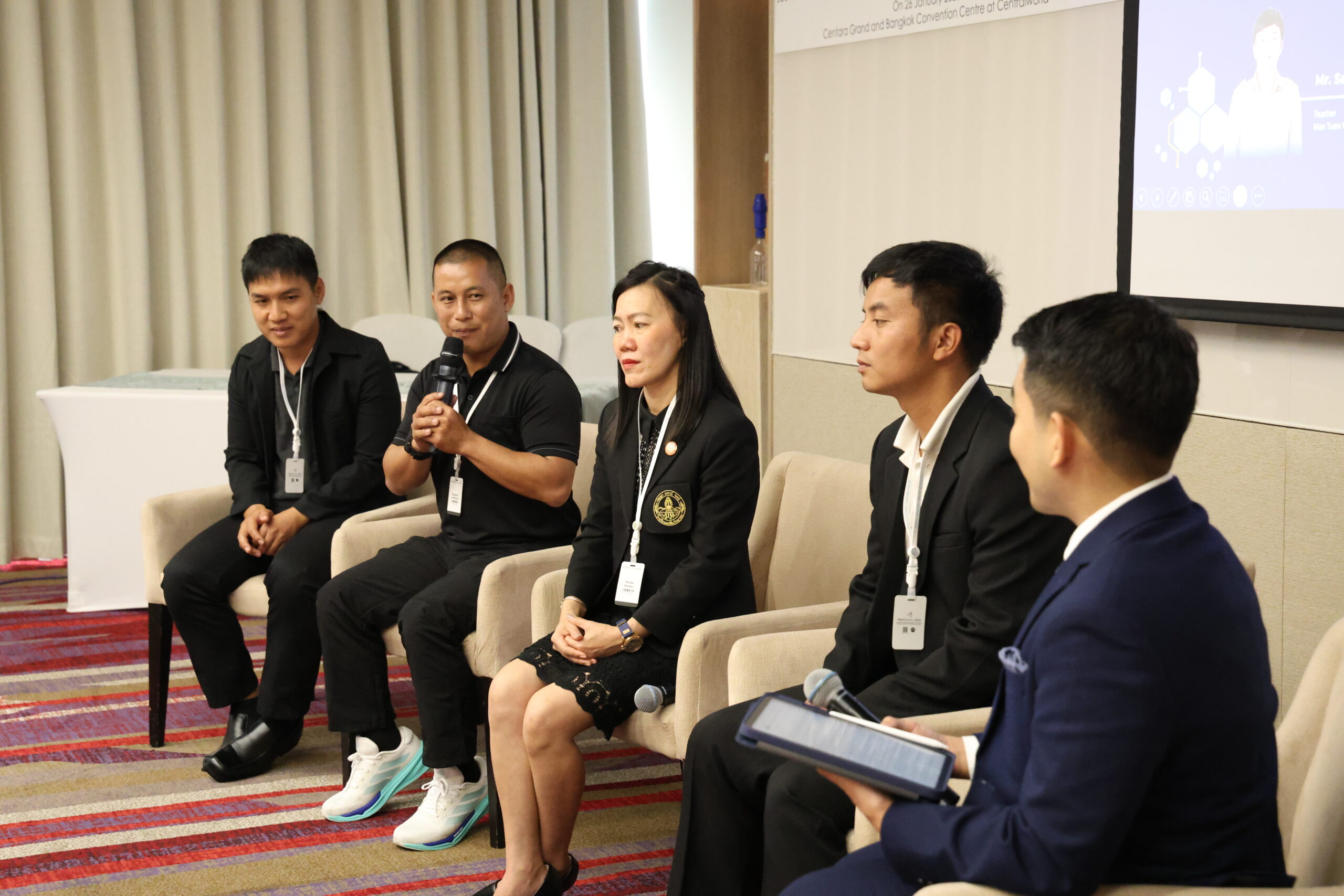
The side meeting was honored by the presence of community representatives from remote areas and researchers from the National University of Singapore, who joined to share and exchange insights from real-world experience.
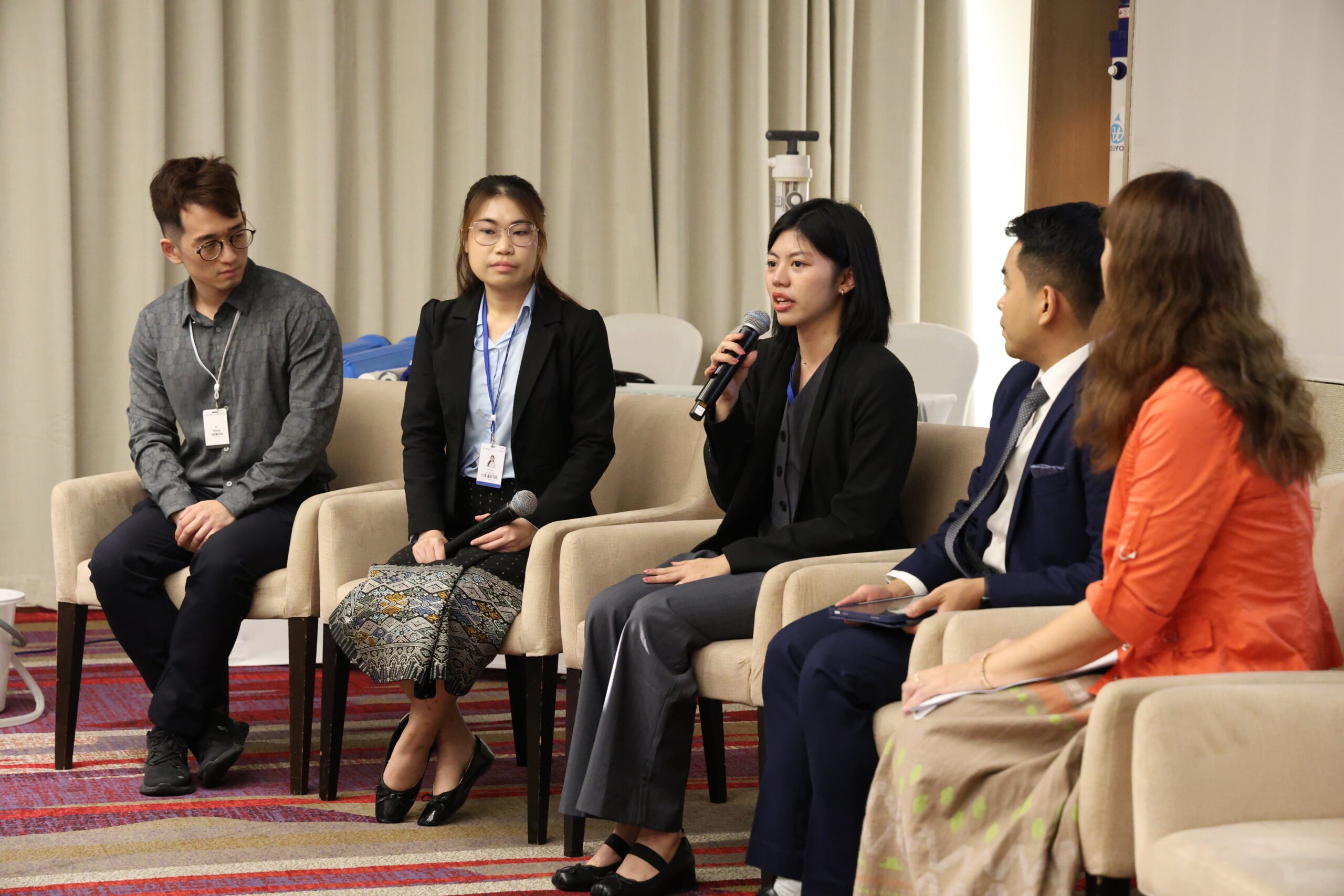
The session featured an analysis of water security in rural schools and healthcare facilities, presented through real-life situations and the experiences of community representatives from remote areas. This was followed by a session on lessons learned from building collaborations in Lao PDR, featuring Ms. Gracya Rudiman and Dr. Nirada Vannavong. Additionally, Dr. Teerawat Wiwatpanit, Research Program Manager and Research Fellow from the MIDAS unit, provided an analysis of approaches to addressing water insecurity in Thailand’s rural schools. It also showcased findings on user satisfaction and the impact of water filtration innovations in Thai pilot areas through a Photovoice activity. The side meeting concluded with a presentation on a new model for assessing the value for money of water security investments by Dr. Yot Teerawattananon, Assistant Secretary General of the Foundation & Senior Researcher at HITAP, to collectively identify the most effective strategies and determine the next steps for scaling the project in the future.
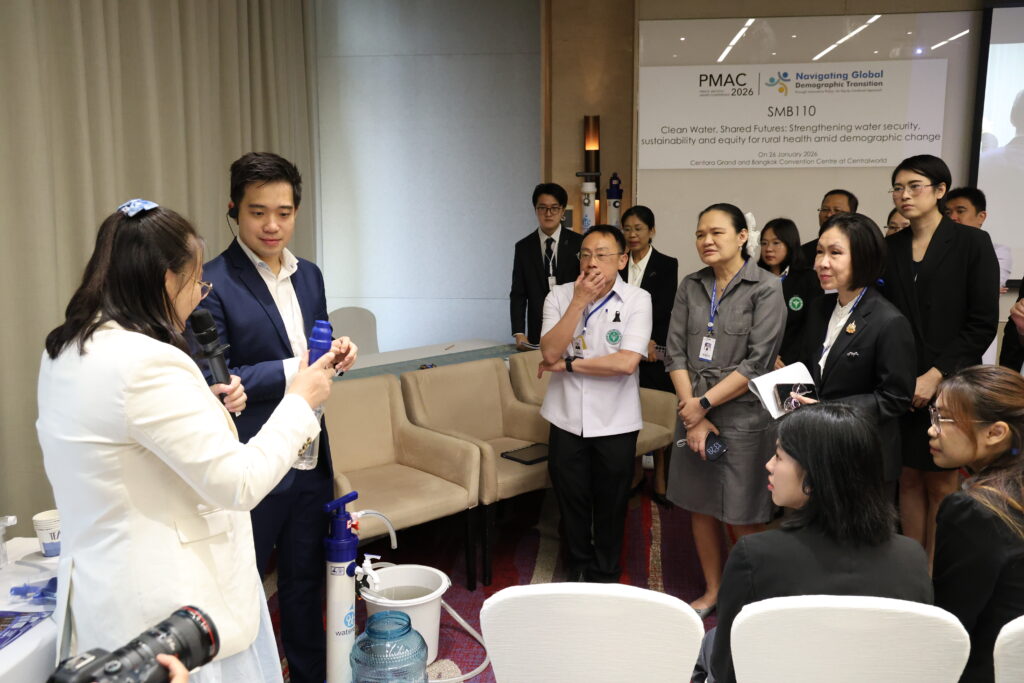
Another highlight of the side meeting was the presentation of water filtration innovations that provided concrete solutions, led by Dr. Wu Mengyuan from Wateroam. This included a demonstration of the equipment and water quality testing by the Wateroam team to verify the technology’s effectiveness in converting contaminated water into clean water. The session concluded with a summary and a discussion on the way forward, featuring Dr. Yot Teerawattananon and Dr. Yik-Ying Teo from NUS, who joined to define the direction for building sustainable regional water security. The conclusions drawn from the brainstorming of experts throughout this forum will be developed into a policy roadmap to lay the foundation for sustainable clean water infrastructure and further bridge the health gap for populations in remote areas
Uniting global experts to address the antimicrobial resistance crisis in aging societies through the "Global Antibiotic Policy Initiative (GAPi)" project
The Global Antibiotic Policy Initiative (GAPi) has officially launched in Thailand, hosting an international academic conference alongside partner networks to drive policies for managing Antimicrobial Resistance (AMR). The initiative focuses on utilizing health economics and fostering equity within the global health system.
Supported by the Wellcome Trust, the GAPi project is a robust academic collaboration between HITAP, City St George’s, University of London, the University of Oxford, One Health Trust, and the Center for Global Development. Its goal is to elevate antibiotic policymaking through evidence-based practices while preparing the global public health system for future challenges.
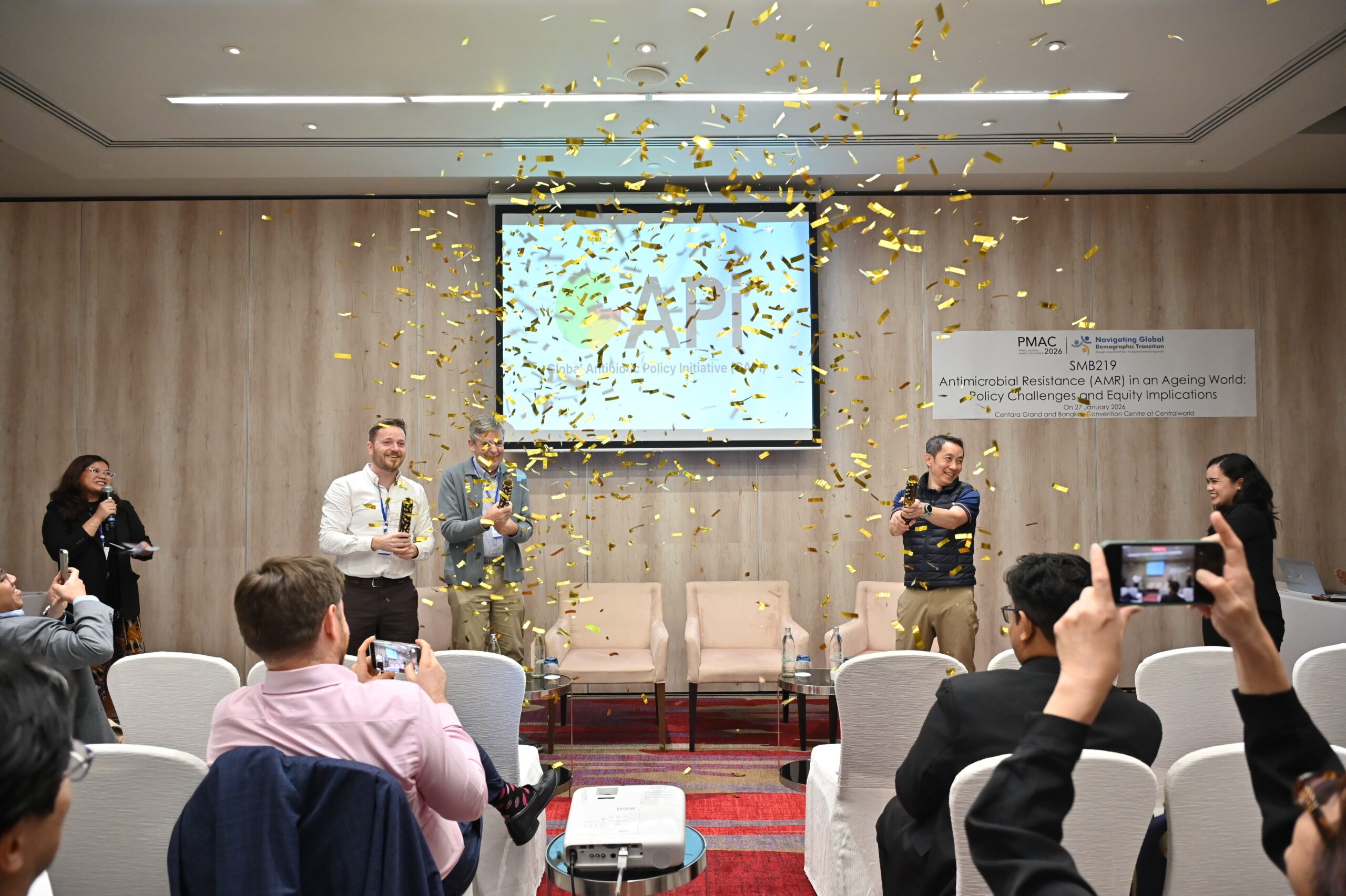
In PMAC 2026, the GAPi project, under the operation of HITAP, organized a side meeting titled “Antimicrobial Resistance (AMR) in an Ageing World: Policy Challenges and Equity Implications” to highlight the intersection between demographic shifts and the antimicrobial resistance crisis.
Dr. Mike Sharland from the Antibiotic Policy Group, City St George’s, University of London, delivered a keynote speech on “Antimicrobial Resistance: The Global Challenge in an Ageing World.” He emphasized that antimicrobial resistance is not merely a medical crisis but a complex global policy challenge that intensifies as the global population ages, resulting in significantly increased pressure on healthcare systems.
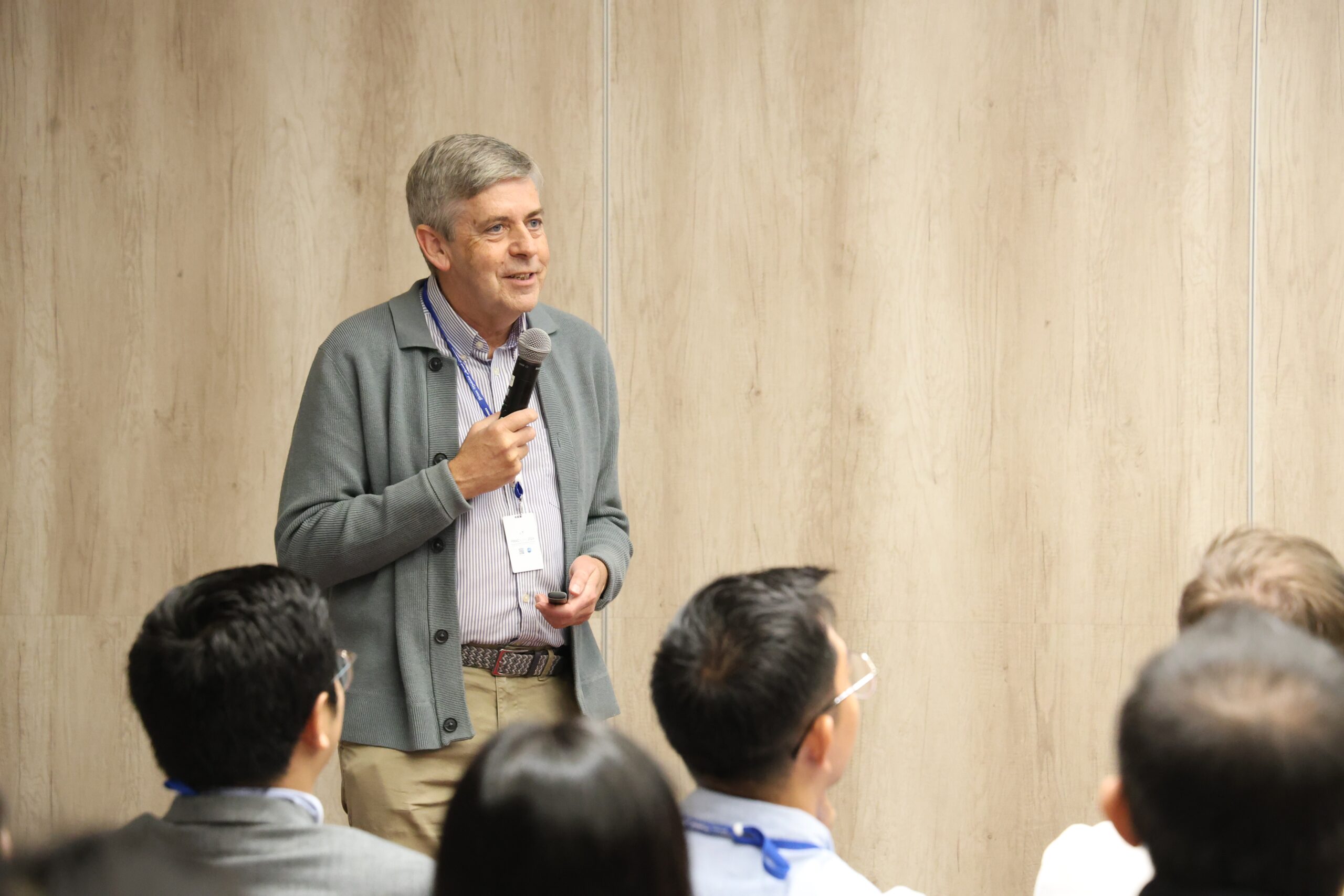
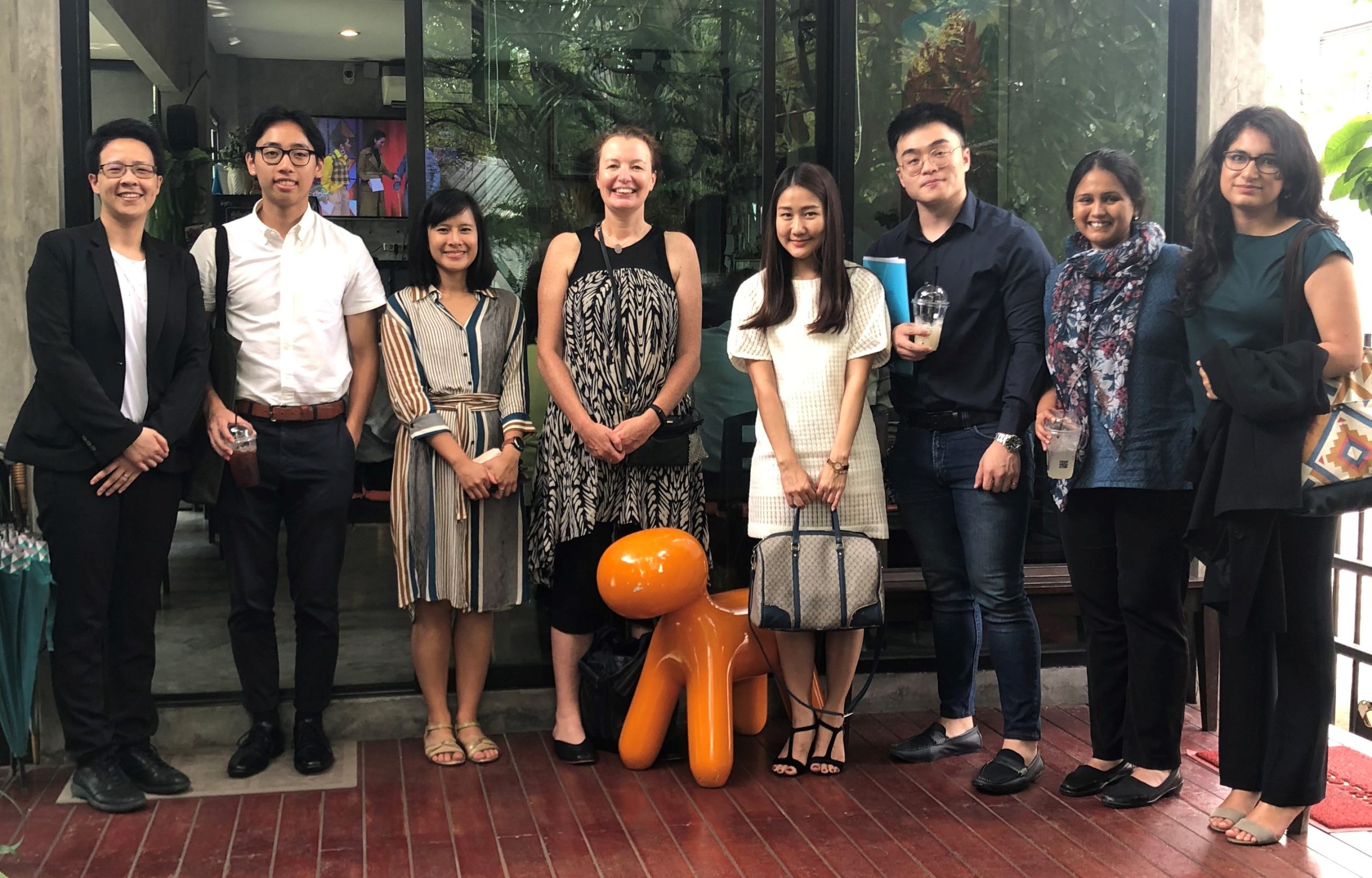
Alongside this, key insights were presented by Prof. Alex Cook, Professor and Vice Dean of the Saw Swee Hock School of Public Health, and Aislinn Cook from the Antibiotic Policy Group, City St. George’s University of London (WHO Collaborating Centre for Antimicrobial Stewardship and Policy). Joining the discussion were Dr. Nithima Sumpradit from the Food and Drug Administration, Dr. Yot Teerawattananon, as well as Saudamini Dabak, Head of HITAP International Unit, and Ms. Thitipanchaya Panya, International Unit Officer from HITAP. Together, they engaged in a panel discussion and addressed questions regarding the critical issues of the antimicrobial resistance crisis.
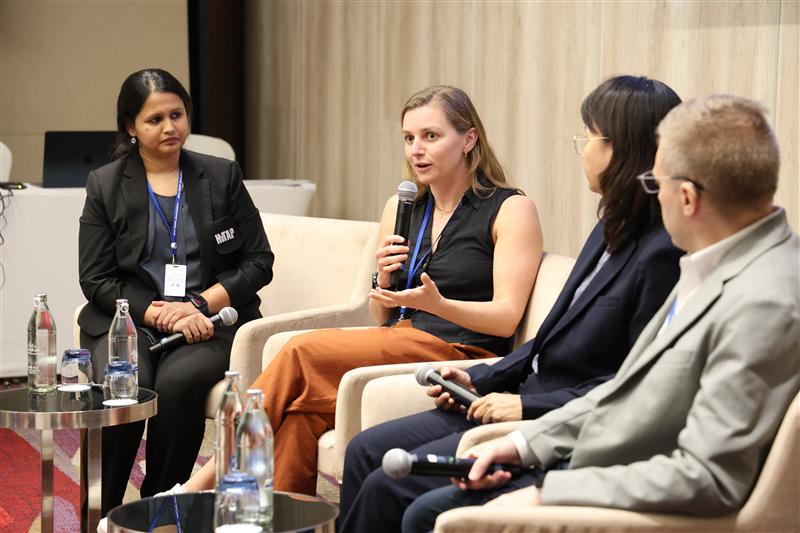
Meanwhile, Dr. David Smith from the French National Institute for Health and Medical Research (INSERM) shared the vision for the GAPi project, highlighting it as a vital mechanism for fostering international collaboration. He emphasized its role in establishing sustainable and equitable pathways for accessing effective antibiotics for both current and future generations.
The launch and activities on this global stage represent a significant milestone, demonstrating the readiness of Thailand and its network of partners to lead in policy research. This initiative underscores the commitment to transforming research into tangible outcomes for both Thailand and the United Kingdom.
Launching the 'Dialysis Policy' report in an international journal, highlighting the importance of evidence-based practices for sustainable health systems.
One of the significant international milestones for the Thai public health system in this PMAC 2026 was the launch of the Nature Medicine Commission on Access to Dialysis in Low- and Middle-Income Countries report. This work has been published in the world-renowned medical journal, Nature Medicine.
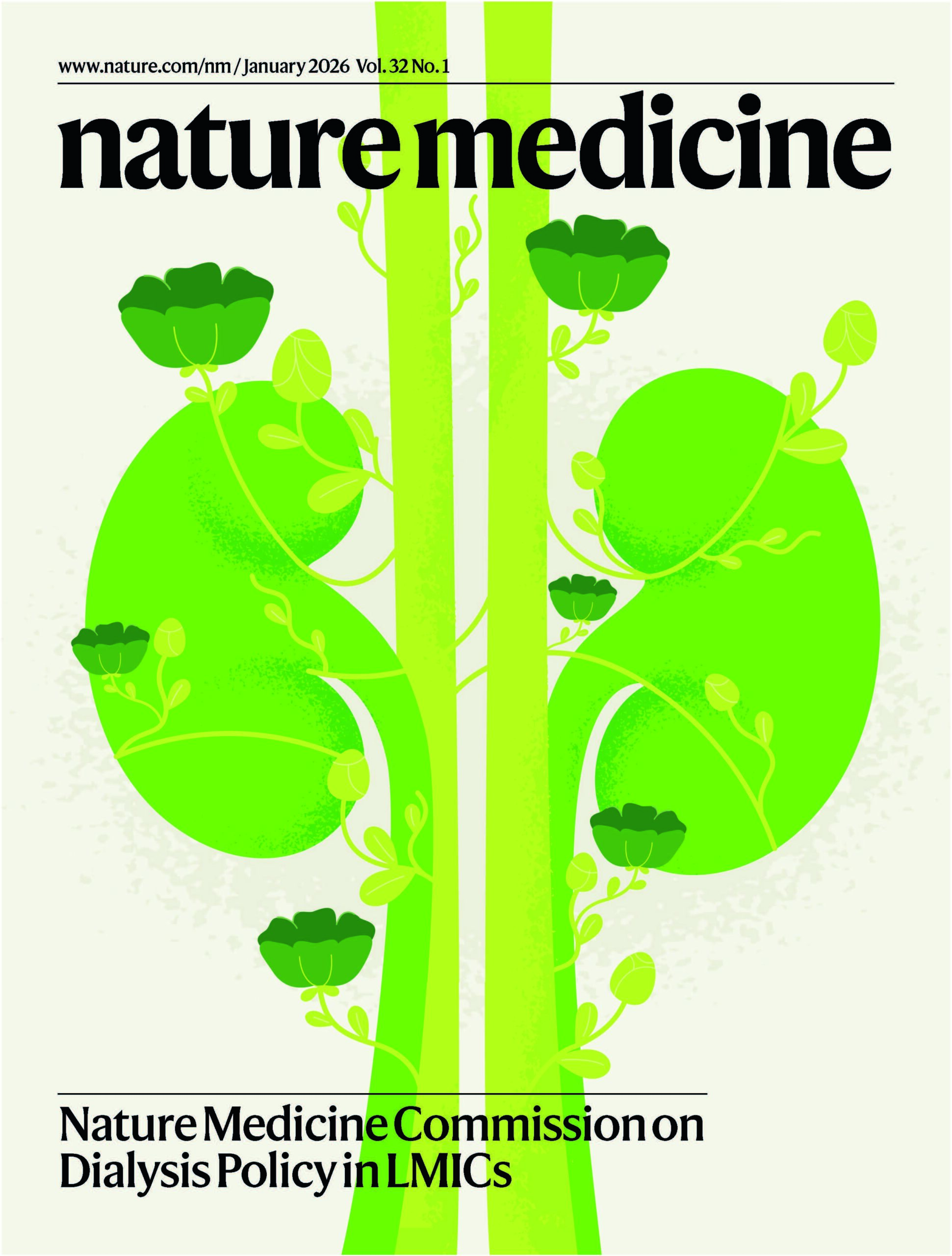
This report aims to draw lessons from the balancing of Thailand’s dialysis policy under limited resources, particularly following the 2022 policy adjustment that allowed patients to choose their own treatment method. This shift has resulted in the proportion of hemodialysis (HD) soaring to 86% and could potentially consume up to 30% of the Universal Health Coverage budget by 2033 if appropriate measures are not implemented. Consequently, this report serves as a vital tool for establishing a stable and sustainable foundation for long-term health policy.
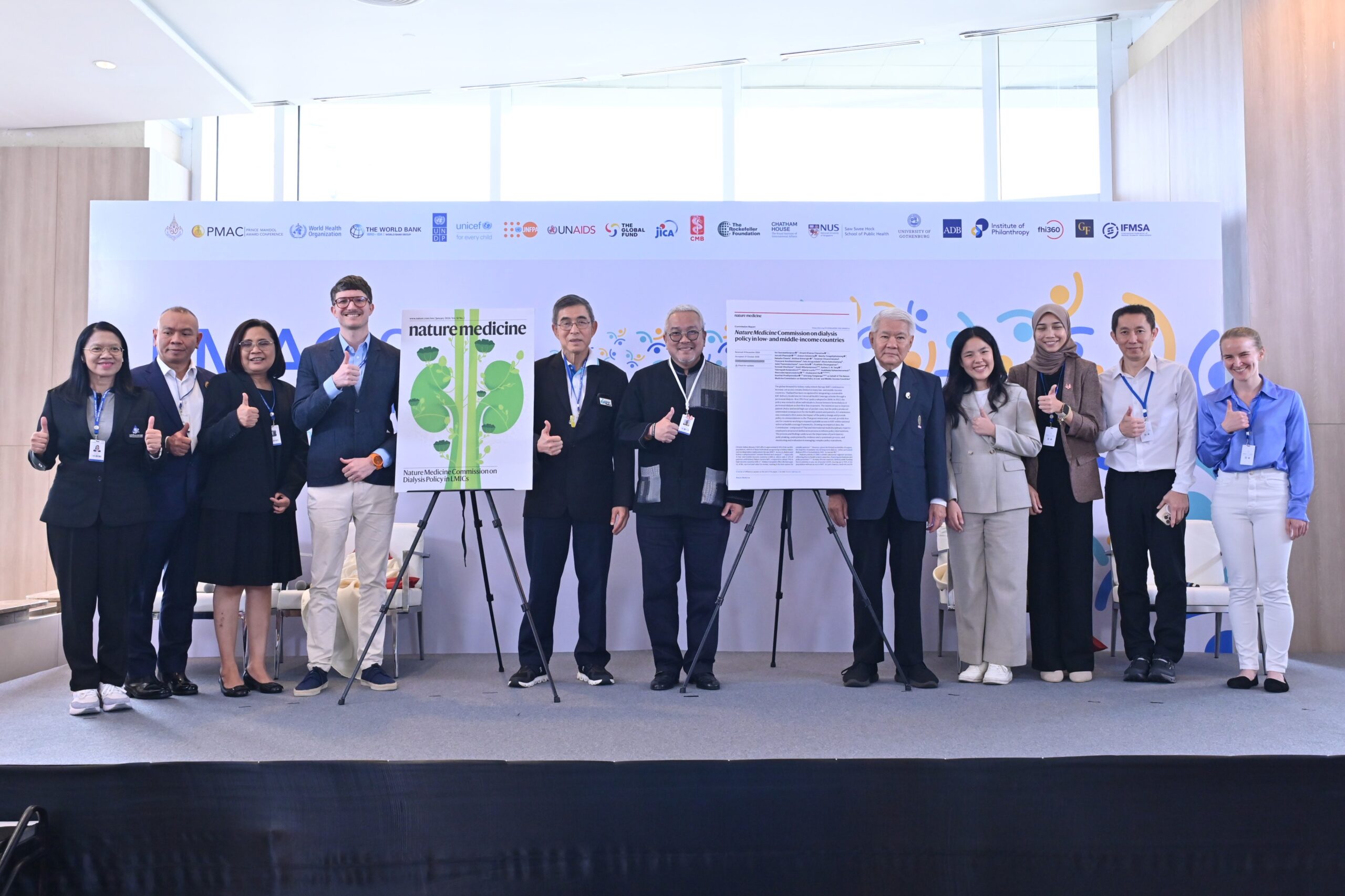
During the report’s launch event, the working group—led by Dr. Suwit Wibulpolprasert, a national public health expert; Prof. Dr. Kriang Tungsanga, a nephrologist at Faculty of Medicine, Chulalongkorn University and Bhumirajanagarindra Kidney Institute Hospital, Dr. Yot Teerawattananon, Senior Researcher and Assistant Secretary General of HITAP; along with Kinanti Khansa Chavarina, HITAP researcher, and Ben Johnson, Chief Editor of Nature Health—collectively reflected that policy should be adaptable based on empirical evidence. They emphasized the necessity of balancing patient choice, medical appropriateness, and commercial pressures to ensure that public-private partnerships function for the ultimate benefit of the patient. These lessons from Thailand will serve as a global model for other low- and middle-income countries in building equitable and sustainable healthcare systems.
Read the full report, “Nature Medicine Commission on Access to Dialysis in Low- and Middle-Income Countries,” at: https://www.nature.com/collections/fbijigbccd